
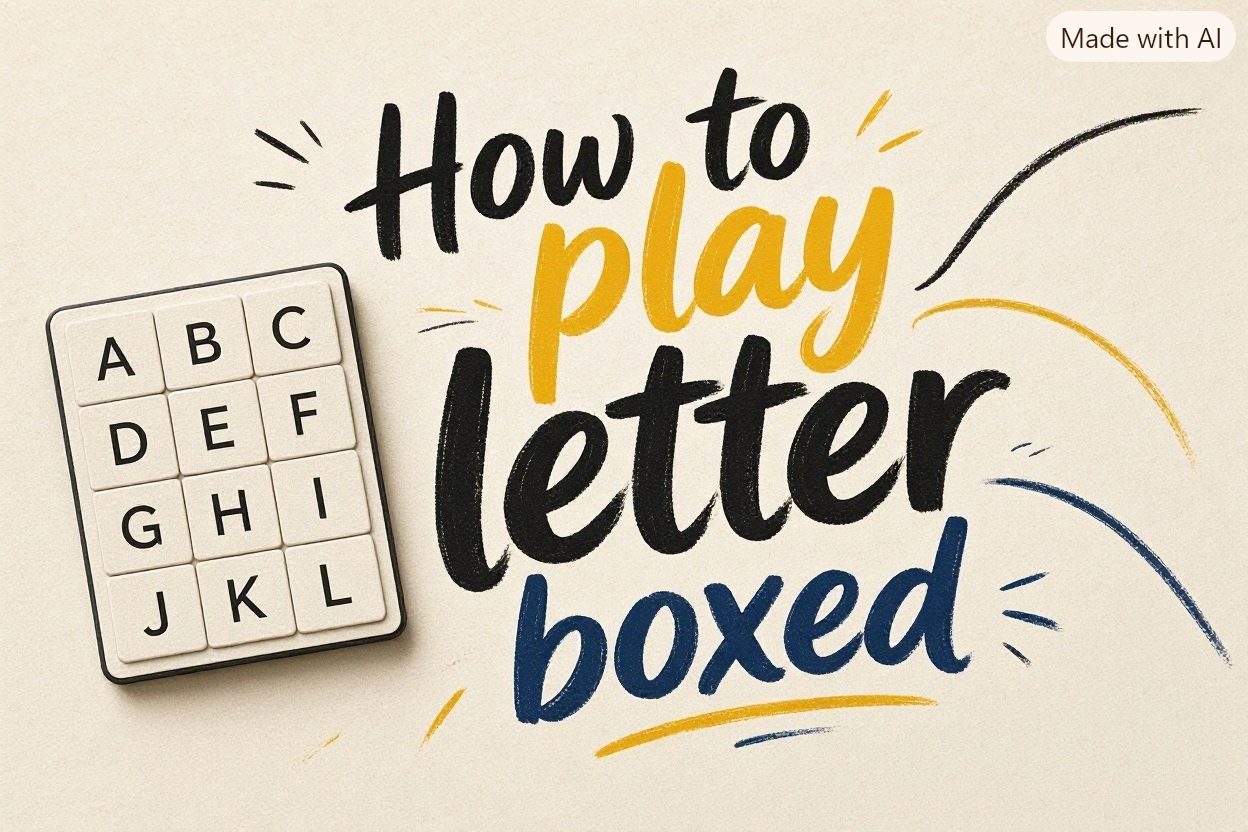
How To Play Letter Boxed
Letter Boxed is a daily word puzzle that challenges you to connect letters around a square while using every letter in as few words as possible. Learning how to play Letter Boxed is simple at first, but solving it efficiently requires vocabulary, pattern recognition, and careful planning. Each puzzle gives you twelve letters placed on four sides of a box. Your job is to form words by moving from one side to another without using two consecutive letters from the same side. The final word must connect back to the first letter of the next word, creating a continuous chain. This guide explains the rules, a practical solving process, examples, common mistakes, and strategies that can help beginners and experienced players improve.
What Letter Boxed Means
Letter Boxed is a word-linking game built around a square containing four groups of letters. Instead of choosing letters from a normal grid, you select them from the box’s sides. Every new letter in a word must come from a different side than the letter before it.
The puzzle is usually solved with a small chain of valid words. A strong solution might use only two or three words, while a longer solution may still be accepted if it follows all rules and uses every available letter. The central challenge is not merely finding words. It is finding words that work together.
Why Letter Boxed Is Worth Playing
Letter Boxed offers a satisfying mix of language practice and logical problem-solving. Because every choice affects the next word, it encourages players to look beyond obvious answers and think about letter relationships.
It can improve spelling awareness, expand active vocabulary, and strengthen the habit of testing several possibilities before committing to one. It is also a short daily challenge, making it approachable for people who enjoy word games but do not want a long session.
How The Letter Boxed Board Works
The board contains four sides, and each side has three letters. Together, the sides provide twelve letters that may be used repeatedly throughout the puzzle.
You can use any letter as long as it follows the movement rule. For example, if a word begins with a letter on the top side, the second letter cannot also come from the top side. It must come from the left, right, or bottom side. The third letter must then come from a different side than the second letter.
A letter may appear more than once in the same word if the board allows the required movement between sides. This detail is important because many useful words repeat vowels or common consonants.
The Core Rules Of Letter Boxed
1. Alternate Between Sides
The most important rule is that consecutive letters cannot come from the same side of the square. Before submitting a word, trace each letter mentally and check that every move crosses to another side. A word that looks valid in normal spelling may fail because two neighboring letters sit on one side.
2. Use Valid Words
Letter Boxed accepts standard dictionary words, but not every familiar abbreviation, name, slang term, or specialized word will be allowed. If a reasonable word is rejected, do not spend too long forcing it. Try a simpler variation or use another word that serves the same purpose.
3. Link Words Together
The first letter of each new word must match the last letter of the previous word. If your first word ends in R, your next word must begin with R. This rule turns individual word finding into chain building and makes final-letter planning essential.
4. Cover Every Letter
To complete the puzzle, your entire word chain must use all twelve letters at least once. Repeating letters is allowed, but unused letters remain a problem. Keep track of rare or inconvenient letters early so you do not reach the end with one difficult letter left.
5. Aim For Fewer Words
You do not need to solve every puzzle in two words, but fewer words generally means a cleaner and more elegant solution. Start by trying to find long, flexible words. Then look for a second word that begins with the correct ending letter and covers the remaining letters.
6. Reuse Letters When Helpful
There is no penalty for using a letter more than once. Repetition can help you build longer words, connect awkward endings, or create a bridge between two useful letter groups. Focus on coverage and legal movement rather than trying to use each letter only once.
7. Check The Final Connection
A complete answer must form a continuous sequence. Review the last letter of every word and the first letter of the next one. A chain can contain excellent words and still fail if even one connection is broken.
How To Play Letter Boxed Step By Step
1. Scan The Four Sides
Start by reading all twelve letters and noticing which letters are difficult, such as J, K, V, X, or a less common vowel pattern. Also look for letter combinations that could make longer words. This quick survey gives you a direction before you start guessing.
2. Mark Possible Starting Letters
Some letters naturally begin many words, while others are more useful in the middle or at the end. Consider starting with a flexible letter that can lead to several word types. Avoid choosing a starting word only because it is the first word you notice.
3. Build Long Legal Words
Try to create words that cross sides frequently and include several different letters. Longer words are valuable because they can cover more of the board at once. However, do not force an obscure word if a shorter, more dependable word creates a better chain.
4. Watch The Ending Letter
Every word is also a setup for the next word. When you find a possible word, pay close attention to its final letter. Ask yourself whether you can think of useful words beginning with that letter. A strong ending often matters as much as a strong word.
5. Track Unused Letters
After finding one or two words, list the letters you have not used yet. This prevents you from repeatedly making attractive words that ignore the same difficult letter. A good solver constantly balances word length with remaining coverage.
6. Search For Bridge Words
A bridge word starts with the letter you currently need and ends with a letter that unlocks another useful word. These words are especially helpful when the remaining letters do not fit neatly into one final answer. Think of them as connectors, not wasted moves.
7. Test The Full Chain
Before submitting, verify three things: every word is legal, every transition matches, and every board letter appears somewhere in the chain. A quick final review prevents frustrating near-solves and helps you learn which patterns caused the issue.
8. Refine The Solution
If your first solution uses many words, see whether two adjacent words can be replaced by one longer word. You may not always improve it, but this exercise teaches efficient word construction and often reveals a more satisfying answer.
A Simple Letter Boxed Example
Imagine a puzzle where one available word ends with the letter S. Your next word must begin with S, so you should immediately search for words starting with that letter that can reach unplayed letters on other sides.
Suppose your first word covers several common letters but misses a difficult letter such as V. Rather than adding a random short word at the end, search for an S-word that includes V and ends with a flexible letter such as R, N, or T. That final letter may create a better route for your next word.
The exact answers change from puzzle to puzzle, but the thinking process stays consistent. Find a useful first word, protect the chain connection, and make sure each later word solves a coverage problem rather than merely adding length.
Best Strategies For Solving Letter Boxed
1. Prioritize Awkward Letters
Difficult letters often become the reason a promising chain fails. If a puzzle includes a letter that appears in fewer common words, look for it early. You do not always need to use it in the first word, but you should know which word families can accommodate it.
2. Think In Word Families
Instead of searching for one perfect word, consider related forms. A noun, verb, adjective, or plural may have a different ending letter and therefore work better in the chain. Small changes in word form can completely change the quality of a solution.
3. Use Vowels As Connectors
Vowels often make good bridges because many words begin with them. A word ending in A, E, I, O, or U can open several possibilities, although the board’s side arrangement still controls whether the next word is legal.
4. Look For Prefixes And Suffixes
Common beginnings and endings can help you identify legal word shapes. Prefixes such as re-, un-, and inter- may be useful, while endings such as -ing, -er, -ion, and -ly can extend words and change the final connection point.
5. Do Not Chase Only Long Words
A very long word can feel impressive, but it may end with a letter that leaves no practical follow-up. A medium-length word with a flexible ending can be much more valuable. Letter Boxed rewards connected planning, not isolated vocabulary displays.
6. Work Backward From Leftover Letters
When only a few letters remain unused, ask which words could include all or most of them. Then check what starting letter those words require. This backward approach often reveals what your previous word should end with.
7. Keep Multiple Options Open
Avoid committing too early. It is useful to keep two or three possible first words in mind while you search for follow-up words. The best opening is usually the one that gives the next move the most choices.
Common Letter Boxed Mistakes To Avoid
1. Ignoring The Side Rule
The most frequent beginner mistake is focusing on spelling and forgetting letter position. A word may look perfect until two consecutive letters come from the same side. Trace the path carefully, especially in longer words where one illegal transition is easy to miss.
2. Using A Great Word With A Bad Ending
A long word is not always a good Letter Boxed word. If it ends with a letter that begins very few useful words, it may trap your chain. Before submitting, consider whether its final letter gives you a realistic next move.
3. Leaving Difficult Letters Until Last
Saving an awkward letter for the final word can make the puzzle much harder. If the remaining letter has few compatible partners, you may need to rebuild the whole chain. Identify difficult letters early and create a plan for each one.
4. Forgetting That Letters Can Repeat
Some players mistakenly try to use every letter exactly once. That restriction does not exist. Repeating a letter can make a legal word possible, improve a connection, or allow you to cover a difficult letter without damaging the rest of the chain.
5. Making Too Many Short Words
Short words can be useful bridges, but too many of them often signal that the chain has not been planned efficiently. If your answer keeps growing, pause and look for a longer replacement that covers several needs at once.
6. Treating Every Rejected Word As A Dead End
A rejected word may mean the puzzle dictionary does not accept that form, but your underlying idea can still be useful. Try a related spelling, another tense, a plural form, or a different word that uses the same important letters.
7. Stopping At The First Valid Solution
A valid answer is a success, especially when learning. Still, checking for a shorter chain can improve your skills quickly. Review your words and ask whether a different ending or a longer bridge could reduce the total number of words.
Useful Letter Boxed Habits
Letter Boxed becomes easier when you build a repeatable routine. Start by noting the board’s unusual letters, then search for long legal words that contain them. Next, inspect the ending letters of those words before making any commitment.
It also helps to say the letter path quietly to yourself. Hearing the sequence can reveal illegal same-side moves that your eyes miss. This is particularly useful when two letters are visually close but belong to different sides of the box.
Keep the board flexible in your mind. A letter is not permanently assigned to one role as a beginning, middle, or ending letter. The best solution often appears when you reconsider a word that you initially dismissed because it ended differently than expected.
When you get stuck, stop searching for a complete answer. Search for one useful transition instead. Finding a word that starts and ends well can unlock the rest of the puzzle.
Finally, accept that some daily boards require experimentation. Failed chains are not wasted effort. They teach you which endings are restrictive, which patterns are legal, and which word families are reliable for future puzzles.
Practical Ways To Improve At Letter Boxed
1. Play Regularly
Frequent practice builds familiarity with the game’s movement rule and common word shapes. Even a few minutes a day can improve your ability to notice legal paths without tracing every letter slowly.
2. Expand Your Active Vocabulary
You do not need obscure vocabulary to enjoy Letter Boxed, but knowing more word forms helps. Pay attention to accepted words you did not consider and remember the letter patterns that made them useful.
3. Review Completed Puzzles
After solving a puzzle, look back at your chain. Notice which word handled the hardest letters, which ending created the key connection, and whether the order could have been improved. Reflection turns a completed puzzle into a lesson.
4. Practice With Constraints
Give yourself a small extra challenge, such as trying to solve in three words or fewer. Constraints encourage efficient planning and reveal the difference between a merely valid solution and a polished one.
5. Learn Common Endings
Words ending in flexible letters can be especially valuable. Build a mental list of common words beginning with those letters as well. This makes it easier to judge whether a possible word will keep your chain alive.
6. Separate Discovery From Submission
Do not submit every word as soon as you find it. Spend a moment exploring alternatives first. This reduces the need to restart and helps you choose words that support the entire solution rather than one immediate move.
7. Stay Patient With Hard Boards
Some Letter Boxed puzzles are naturally more difficult because of their letter combinations. A slow solve does not mean you are doing poorly. Break the board into smaller problems: difficult letters, possible openings, useful endings, and remaining coverage.
Frequently Asked Questions
1. Is Letter Boxed Difficult For Beginners?
Letter Boxed can feel unusual at first because the side-switching rule is different from most word games. Beginners usually improve quickly once they trace letters carefully and focus on making legal words. Start with simple words, then gradually practice planning longer chains.
2. Can You Use The Same Letter More Than Once?
Yes, you can reuse letters as often as needed. The goal is to use every letter on the board at least once, not exactly once. Repeating letters is often necessary for building longer words, creating a legal path, or connecting one word to another.
3. Do Words Have To Be In A Specific Order?
Yes. Each new word must begin with the final letter of the previous word. This means word order is essential. You may have several useful words available, but they only work together when their beginning and ending letters create a continuous chain.
4. What Happens If A Word Uses Two Letters From One Side?
The word is invalid if two consecutive letters come from the same side of the box. You can use letters from the same side in one word only when another side’s letter appears between them. Always check each movement, not only the word’s spelling.
5. Is It Better To Use Long Words?
Long words are often helpful because they cover more letters, but they are not automatically better. A long word with a restrictive ending can make the puzzle harder. Choose words that cover useful letters and leave an ending that supports the next word.
6. How Many Words Should A Letter Boxed Solution Use?
There is no single required number of words. A solution is complete when it follows the movement and linking rules and uses all twelve letters. Many players aim for two or three words, but a longer valid chain is still a successful solve.
Conclusion
Learning how to play Letter Boxed starts with one core rule: move between different sides of the square for every consecutive letter. From there, success comes from linking word endings to new beginnings and using every board letter in one continuous chain.
The best approach is to think ahead without overcomplicating the puzzle. Look for long legal words, plan around difficult letters, protect flexible ending letters, and review your final chain before submitting. With steady practice, Letter Boxed becomes a rewarding daily exercise in vocabulary, logic, and creative problem-solving.
Discussion